
NTS
NTS - National Traffic System
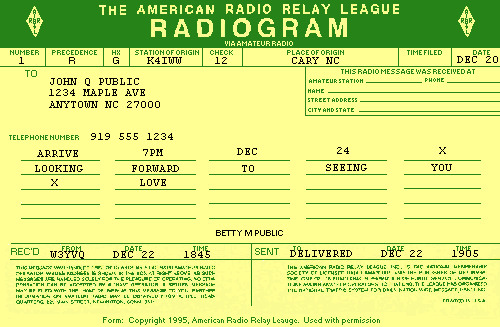
The National Traffic System is the organized, nationwide framework used by amateur radio operators to move emergency and public service messages when normal communications may be disrupted. It relies on standardized message formats, disciplined procedures, and a network of trained volunteers who operate through local clubs, nets, and routing stations. Messages are created in plain language, routed through designated “net controls,” and relayed step by step through a hierarchy that connects local operators to regional and national traffic handlers. The aim is to ensure that critical information can be transmitted accurately and efficiently across long distances, even in emergencies.
The benefits of the NTS include reliable, redundant communication pathways during disasters when other systems fail; the ability to practice and refine emergency communications skills in a structured setting; rapid dissemination and delivery of important messages to appropriate recipients; and the fostering of collaboration and coordination among amateur radio operators, public safety partners, and emergency management organizations. By standardizing procedures and training many volunteers, the NTS helps ensure that vital information can flow where it’s needed, when it’s needed.
Vermont / New Hampshire CW Traffic Net (VTNH) 7p Daily 3539khz
Granite St Traffic Net (GSTN) 9p Daily N1IMO 146.79 Repeater Pittsfield
Capital Area Digital Net (CADN) 8p Wednesday 146.94 Concord
NH ARES Section Net 8:30a Saturday 3976 khz
1RN C2 Early (LSB) Traffic Net 1:45p Daily 3948 khz (7233 khz condX)
Eastern Area Net (LSB) 2:30p Daily 7222 khz
1RN C2 Late ( LSB) Traffic Net 3:30p Daily 3948 khz
1RN C4 Early CW Traffic Net 7:45p Daily 3598 khz
Eastern Area Net (CW) 8:30p Daily 3552 khz
1RN C4 Late CW Traffic Net 9:30p Daily 3598 khz